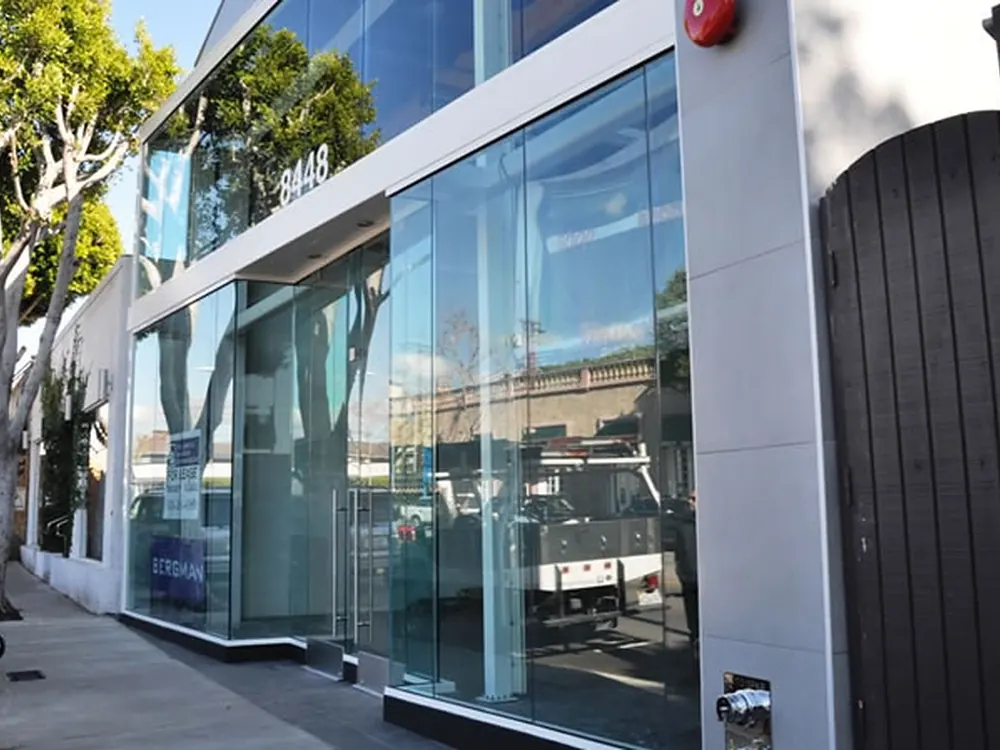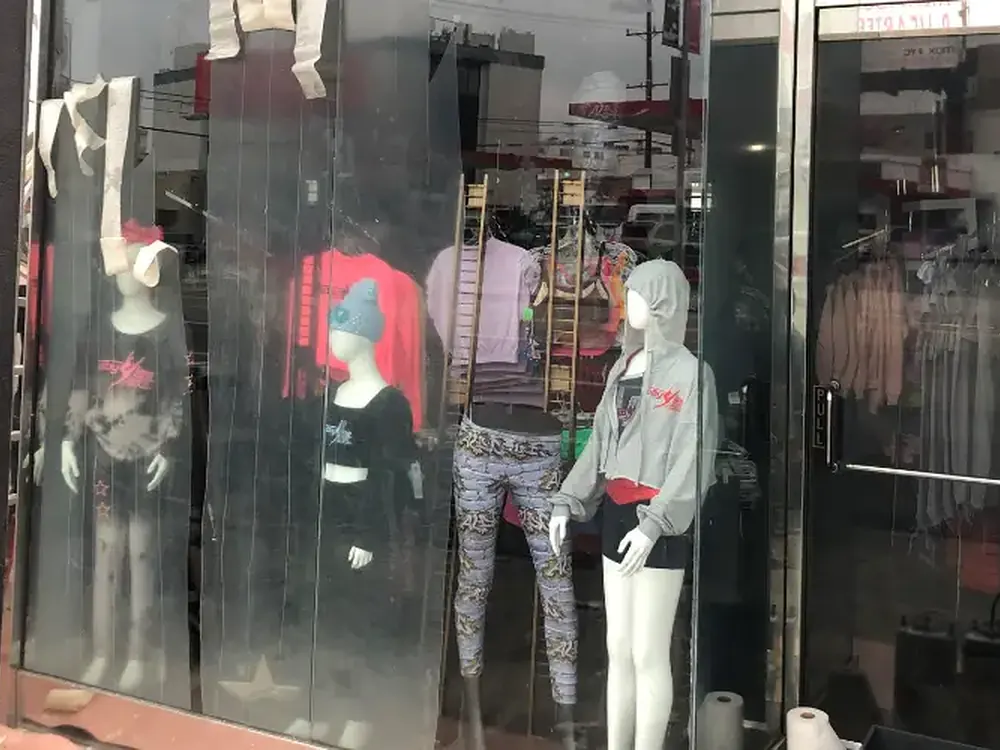
Glass-walled offices leak conversations, which is annoying in most industries. In the animation and post-production suites around this district it's a different category of problem entirely, because what's visible through the glass is frequently work that is contractually not allowed to be seen yet.
The sightline is the exposure
In most offices the privacy concern is audible — someone overhearing a conversation. In a creative or post-production environment the concern is visual, and it's specific: a monitor, a wall of reference boards, or a screening room visible from a corridor that visitors, vendors, and delivery staff pass through.
Confidentiality obligations in this sector are contractual and taken seriously, and "nobody would really be looking" is not a defensible position when the room in question has a glass wall onto a shared circulation route.
Why not just build a wall
The obvious answer is drywall, and sometimes that is the answer. But glass partitions exist for a reason: they let daylight reach the interior of a floor plate that would otherwise be entirely artificially lit, and in a creative environment they keep the space feeling open and connected rather than a corridor of closed doors.
Frosted film keeps both. It's a matte polyester laminate that scatters light rather than blocking it, so it reads as sandblasted or acid-etched glass while still passing daylight through. You lose the sightline, not the light. That's what frosted privacy film is for, at a fraction of the cost of replacing the partition.
Coverage depends on the room's job
Not every room wants the same treatment, and full coverage is often not the right answer:
- Full frost — total visual privacy. The correct choice for review rooms, edit bays, and anywhere unreleased work is displayed.
- Banding — a horizontal frosted band at seated eye level. Right for general meeting rooms where the concern is conversation, not content.
- Gradient — frost fading from opaque at the base to clear at the top. Reads as deliberate design rather than retrofit.
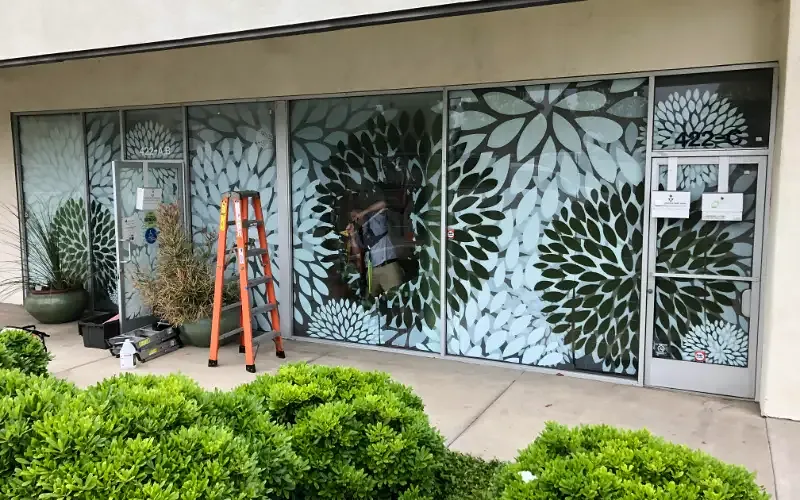
- Cut graphics — logos and patterns cut from frost film. Branding and partial privacy from one layer.
The mistake we see is applying one treatment across an entire floor. Rooms displaying content need full coverage; general meeting rooms usually don't, and over-frosting them costs daylight for no gain.
The code requirement you're solving anyway
Full-height clear glass in a commercial space generally needs a visual marker so people don't walk into it. It's an accessibility issue as much as a safety one, and a lot of buildings satisfy it with a single vinyl dot at eye level that nobody wanted and everyone notices.
Frosted banding or a cut pattern meets the same requirement and looks deliberate. If you're treating glass for privacy you're solving both problems in one scope — worth raising early, because it's meaningfully cheaper as one job than two.
It comes off when the project ends
Production spaces reconfigure constantly. A suite set up for one show becomes something else entirely six months later, and the room that needed full frost may not need it next time. Etched glass is a permanent commitment; film comes off cleanly and goes back on in the new configuration.
The same applies at lease end, when the landlord generally wants clear glass returned. If you're planning a fit-out or fixing one that isn't working, send us the floor plan and we'll mark up what each room actually needs.