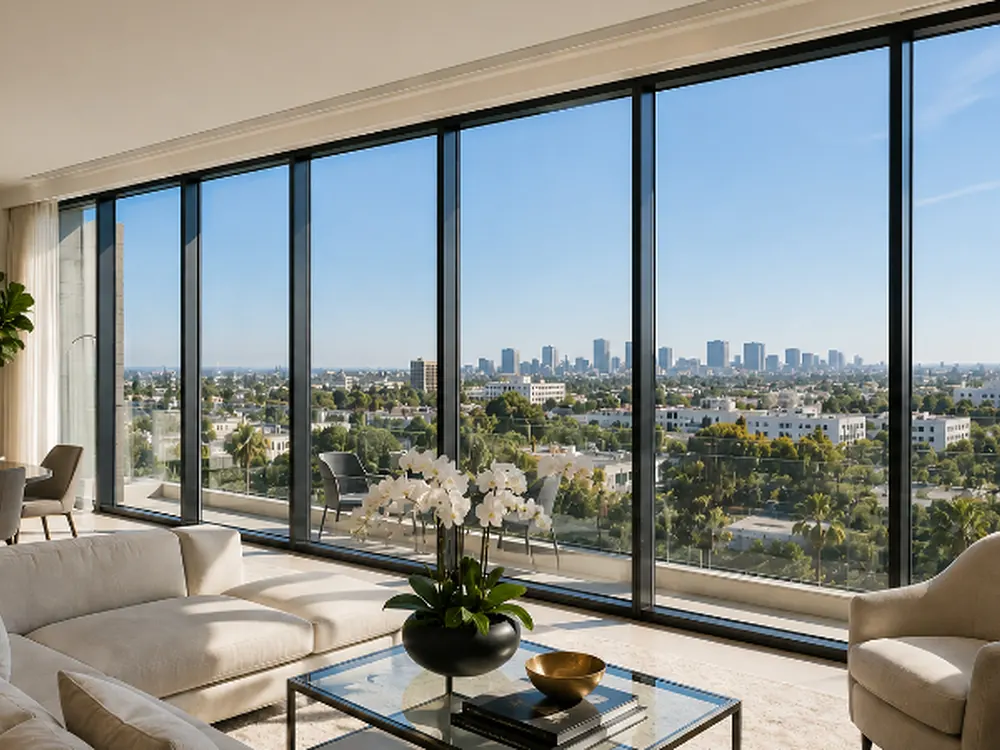
People who move here from the Westside notice it within a week and assume they're imagining it. They aren't. Glendale sits measurably warmer through the afternoon than places a short drive away, and the reason is geography — which matters, because it changes which window film is the right one.
The mountains are the mechanism
Los Angeles cools in the afternoon because marine air pushes inland from the coast. That flow weakens with distance and gets interrupted by terrain, and the Verdugo and San Rafael ranges do exactly that — they sit across the path, reduce the ventilation reaching the valley floor, and leave the air here to sit and heat.
Add the standard urban heat island effect of a dense, paved, mid-rise district and you get a city that holds afternoon heat longer than its neighbours. It's why a west-facing room in Glendale behaves like a west-facing room somewhere considerably further inland.
The hillside gets a second dose
Homes through Chevy Chase Canyon, the Verdugo Woodlands, and up Glenoaks have an additional load that flat-lot houses don't. Sunlight striking bare slopes, retaining walls, driveways, and hardscape reflects and re-radiates, and a house set into a hillside receives some of that on top of the direct sun.
It's most noticeable in rooms facing a slope across a canyon, where the reflected component arrives at a completely different angle from the direct sun and at a different time of day. A film specified only for direct overhead gain doesn't fully address it.
The architecture is the other half
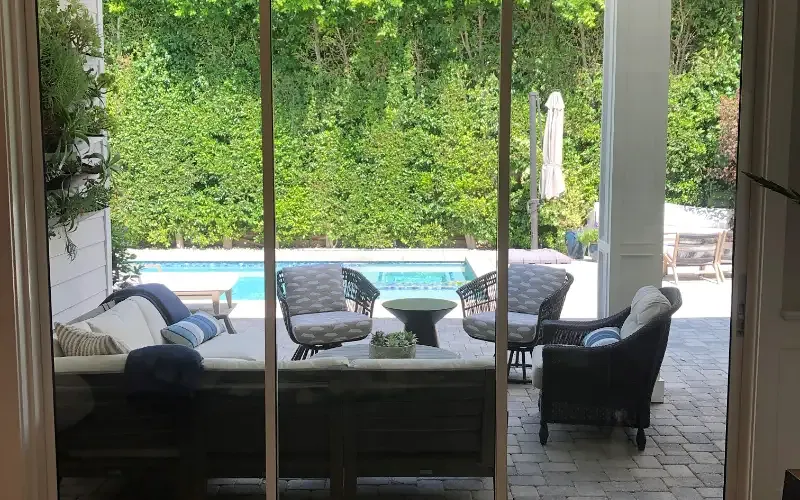
The mid-century and post-and-beam houses that make these neighbourhoods desirable were designed around glass — floor-to-ceiling, often originally single-pane, oriented at whatever view the lot bought. The glass is the entire reason the house is worth what it's worth.
It's also the reason one room is unusable half the year. Single-pane glass passes roughly 80% of the solar energy hitting it, and in a room with two or three glazed walls there's simply nowhere for that energy not to go.
What film delivers, and what it costs you
On the elevation that's causing trouble, a correctly chosen film delivers this:
- Roughly four fifths of the infrared turned away, which is the part the body reads as temperature.
- Ultraviolet down by 99%, which stops floors, rugs, and hung work losing their colour.
- Glare cut enough that screens are readable with the drapes open.
- Air conditioning that switches off between cycles rather than running solidly until evening.
The trade-off is visible light. Every film that rejects meaningful heat reduces some daylight, and on a house whose entire premise is the view that trade matters more than usual. We generally recommend the lightest product that solves the problem rather than the strongest one available — anyone selling you maximum rejection on a canyon house hasn't understood the brief.
Check what glass you actually have
Many of these houses have had windows replaced at some point, so you may have original single-pane in one room and modern dual-pane low-E in another. Those take different films, and one blanket specification across both is how a pane ends up cracked.
Dual-pane units in particular need a thermal stress calculation before anything goes on them — the wrong product raises the outer lite's temperature enough to crack it and voids the glazing warranty at the same time. Get a free assessment and we'll tell you exactly what's in your windows before recommending anything.